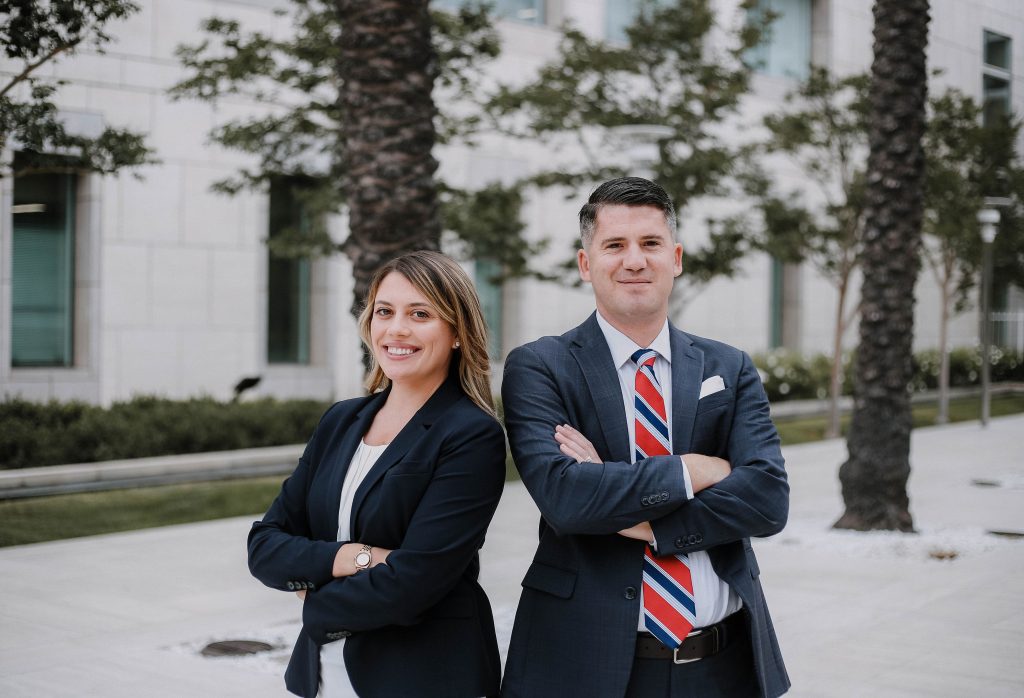
This page was written and reviewed by Michael J. Cefali, Esq. Attorney Cefali is a founding partner of Cefali & Cefali, APC, based in San Juan Capistrano, CA. He holds a Juris Doctor from Chapman University Fowler School of Law and a B.A. in Global Studies & Maritime Affairs from the California Maritime Academy. Widely recognized for his advocacy in personal injury law, he has secured multi-hundred-thousand-dollar settlements in motorcycle accidents, hit-and-runs, and red-light collision cases. He maintains a perfect 10.0 “Superb” rating on Avvo.
Beyond his legal practice, Mr. Cefali actively supports his community through the Rotary Club of San Juan Capistrano, contributes to housing and meal programs for those in need, and enjoys fishing and spending time with his rescue dogs.
The date below reflects when this page was last reviewed for accuracy. Please see our Editorial Guidelines.
If a commercial truck hit you in Mission Viejo, you can recover your medical bills, lost income, and pain and suffering from the driver and, in most cases, the trucking company behind them. Truck cases are different from car cases: federal safety rules apply, several companies may share the blame, and key evidence like the truck's data recorder can be erased within days. A Mission Viejo truck accident lawyer moves fast to lock that evidence down.
Cefali & Cefali represents people hurt in big rig, delivery truck, and commercial vehicle crashes in Mission Viejo and South Orange County. Call (949) 325-7790 for a free consultation, available 24/7. You pay no attorney fee unless we recover compensation for you.
Where Truck Accidents Happen in Mission Viejo
The I-5 is the main freight route through Mission Viejo, carrying big rigs between the Los Angeles area ports, San Diego, and the border every hour of the day. Most serious truck crashes we see happen on that stretch, especially where merging traffic meets slow trucks near the Oso Parkway, Crown Valley Parkway, and Avery Parkway interchanges. Off the freeway, delivery vans, box trucks, dump trucks, and construction vehicles make tight turns on La Paz Road, Marguerite Parkway, and Alicia Parkway, where wide right turns and blind spots put drivers, cyclists, and pedestrians at risk.
Freeway truck crashes are investigated by the California Highway Patrol's Capistrano Area office, while crashes on city streets are handled by the Orange County Sheriff's Department, which provides police services to Mission Viejo. Truck crash victims with multiple fractures, spinal injuries, or head trauma are often transferred from local emergency rooms to UCI Medical Center in Orange, the region's Level I trauma center. We collect the CHP or Sheriff's report, the hospital records, and the trucking company's own files to build your claim.
Why Truck Accident Cases Are Legally Different from Car Accidents
A Mission Viejo truck accident is not just a bigger car accident. Several factors make truck accident cases fundamentally different:
Federal regulations apply. Commercial motor carriers are regulated by the Federal Motor Carrier Safety Administration (FMCSA) under the Federal Motor Carrier Safety Regulations (49 CFR Parts 350-399). These federal rules govern hours of service, vehicle maintenance, driver qualifications, drug and alcohol testing, and cargo securement. Violations often become the foundation of a truck accident negligence claim.
Multiple defendants may share liability. Unlike a typical car accident where liability rests with one at-fault driver, truck accident cases can involve the truck driver, the trucking company (the "motor carrier"), the cargo loader, the maintenance company, the truck manufacturer, and sometimes the shipper. Each represents a potential source of recovery, but also each has its own insurance and legal team.
Insurance policy limits are far higher. Federal law requires interstate trucking companies to carry a minimum of $750,000 in liability insurance for general freight (49 CFR 387.9), and $1 million or more for hazardous materials. This is 25 times higher than California's minimum passenger vehicle liability requirement. Higher policy limits mean truck accident insurance defense is often much more aggressive.
Evidence is time-sensitive and can disappear. Electronic control module (ECM) data (the truck's "black box") can be overwritten. Driver logs can be lost or altered. Vehicle inspection records may be destroyed under retention schedules. A spoliation letter (letter of preservation) must go out within days, not weeks.
Injuries are typically more severe. A fully-loaded semi-truck can weigh 80,000 pounds. When one collides with a passenger vehicle, the physics produce catastrophic injuries far more often than in car-only accidents. This affects both medical treatment and settlement value.
Federal Motor Carrier Safety Regulations That Apply to Mission Viejo Truck Accidents
Federal Motor Carrier Safety Regulations (FMCSR) form the backbone of most commercial trucking negligence claims. Violations of these rules are strong evidence of negligence in a truck accident case:
Hours of Service Rules (49 CFR Part 395)
Federal hours of service rules limit how long commercial drivers can be behind the wheel. Property-carrying drivers may drive a maximum of 11 hours after 10 consecutive hours off duty, may not drive beyond the 14th consecutive hour after coming on duty, and must take a 30-minute break after 8 hours of driving. Drivers must maintain electronic logging device (ELD) records under 49 CFR Part 395.20. Fatigued driving from hours-of-service violations is one of the most common causes of serious truck accidents.
Vehicle Standards (49 CFR Part 393)
Federal regulations specify the safety equipment and mechanical standards commercial trucks must meet, including brake systems, tires, lights, mirrors, and cargo securement devices. Inadequate brake maintenance and worn tires are common contributing factors in Mission Viejo truck accidents.
Driver Qualifications (49 CFR Part 391)
Federal regulations set qualifications for commercial drivers, including a valid commercial driver's license (CDL), medical certification, and background check requirements. Trucking companies that hire unqualified drivers or fail to conduct proper vetting can be held liable under negligent hiring and retention theories.
Drug and Alcohol Testing (49 CFR Part 382)
Commercial drivers are subject to pre-employment, random, post-accident, and reasonable-suspicion drug and alcohol testing. A driver's failure to submit to post-accident testing, or a positive test result, is powerful evidence in a truck accident claim.
California Law That Governs Mission Viejo Truck Accidents
Federal rules set the safety standards, but California law decides your right to compensation and the deadlines to claim it. It also adds its own truck safety rules.
Deadlines for Truck Accident Claims
An injury lawsuit against a trucking company generally must be filed within two years of the crash (Code of Civil Procedure § 335.1), and a claim for vehicle damage alone within three years (§ 338). Because trucking evidence disappears long before those deadlines, the practical deadline is much shorter.
Public Agency Trucks: Six Months to File
City trash and public works trucks, Caltrans maintenance vehicles, and other government trucks are covered by the Government Claims Act. A written claim must usually be filed with the agency within six months of the crash (Government Code § 911.2) before any lawsuit can be brought.
Shared Fault With a Truck Driver
Trucking insurers often claim the car driver cut in front of the truck or lingered in its blind spot. Under California's pure comparative negligence rule, that argument can reduce your award but never wipes it out. If your damages are $500,000 and you are found 15% at fault, you still recover $425,000. Data from the truck's engine control module often shows what really happened.
CVC 21703 Following Distance
California Vehicle Code § 21703 requires every driver to keep a reasonable and prudent following distance. This applies with particular force to commercial trucks, which need substantially more distance to stop safely than passenger vehicles. A fully-loaded semi-truck at highway speed can require 400 feet or more to stop. Following distance violations are frequent contributing factors in Mission Viejo rear-end truck crashes. For the full framework, see our guide on California following distance and the three-second rule.
California Truck Safety Rules
California runs its own motor carrier safety program under Vehicle Code § 34500 and following sections, including CHP inspections of truck terminals and maintenance records. Vehicle Code § 24002 also makes it illegal to operate a vehicle that is not safely equipped or maintained. A truck with worn brakes, bad tires, or broken lights can violate both state and federal rules, which strengthens the case against the carrier.
Who Can Be Held Liable in a Mission Viejo Truck Accident
One of the most important differences between truck and car accident cases is the range of potentially liable parties. In a Mission Viejo truck accident, liability may extend to:
The truck driver. Direct liability for negligent driving, fatigue, distraction, impairment, or hours-of-service violations.
The trucking company (motor carrier). Vicarious liability for the driver's actions under respondeat superior, plus direct liability for negligent hiring, negligent training, negligent retention, negligent supervision, or failure to enforce federal regulations.
The cargo loader or shipper. Liability for improperly loaded, unsecured, or unbalanced cargo that causes or contributes to the accident. This is particularly relevant in rollover and jackknife crashes.
The maintenance provider. Liability for negligent maintenance, particularly of brakes, tires, and steering components.
The truck or component manufacturer. Product liability for defective vehicles or components (brakes, tires, coupling equipment) that contributed to the crash.
The truck owner (if different from the operator). Owner liability under leasing arrangements and California Vehicle Code § 17150 (permissive use).
Delivery companies and their contractors. Many delivery vans in Mission Viejo are driven for Amazon through Delivery Service Partners or for FedEx Ground through independent contractors. The contractor that employs the driver is usually responsible, and depending on how much control the larger company has over the work, it may share liability as well.
Identifying every potentially liable party is critical because it maximizes the insurance coverage and financial resources available to compensate you. Trucking company insurance policies alone often provide inadequate coverage for catastrophic truck accident injuries.
Common Types of Mission Viejo Truck Accidents
Rear-end truck collisions. Common on I-5 and SR-241 during stop-and-go traffic. When a passenger vehicle rear-ends a truck, underride can result. When a truck rear-ends a passenger vehicle, the size mismatch often produces catastrophic injuries. See our guide on California rear-end collision fault for the fault framework.
Jackknife accidents. The trailer swings out at an angle to the tractor, often the result of hard braking, driver error, or improper weight distribution. Jackknife crashes on the freeway can cascade into multi-vehicle pileups.
Rollover accidents. Trucks tip onto their side or roof, often on curves or when cargo shifts. State Route 241 and State Route 73's more sweeping curves can contribute.
Underride accidents. A passenger vehicle slides under the trailer, either from the rear or side. Underride crashes are among the deadliest truck accident types. Federal underride guard standards under 49 CFR 393.86 govern the equipment trucks must carry.
Wide turn accidents. Trucks making right turns from Mission Viejo's arterial streets sometimes swing left before completing the turn, striking vehicles in adjacent lanes or pedestrians in crosswalks.
Blind spot (no-zone) accidents. Commercial trucks have large blind spots on all sides. Lane changes into a passenger vehicle in a truck's blind spot are common causes of collisions on I-5.
Cargo-related crashes. Shifted, spilled, or falling cargo causes accidents both to the truck and to surrounding vehicles.
Driver fatigue accidents. Hours of service violations under 49 CFR 395 are a common contributing factor, particularly on long-haul routes.
An 80,000-pound truck carries many times the force of a passenger car, so truck crash injuries tend to be catastrophic. The injuries we see most often include:
Traumatic brain injuries, from concussions to permanent cognitive damage. See our guide to traumatic brain injury claims.
Spinal cord injuries and paralysis, which can require a lifetime of care. See our guide to spinal cord injury claims.
Crush injuries and amputations, especially in underride and side-impact crashes.
Multiple fractures of the pelvis, legs, ribs, and arms.
Internal injuries and burns, including fuel fires and chemical exposure from hazardous cargo.
Preserving Evidence After a Mission Viejo Truck Accident
Truck accident evidence disappears quickly. Trucking companies have retention schedules that permit destruction of driver logs, dispatch records, and inspection reports after set periods. Electronic control module (ECM) data can be overwritten by continued vehicle use. This is why our firm sends a spoliation letter (letter of preservation) to the trucking company and its insurance carrier immediately after being retained.
Evidence we typically seek to preserve in a Mission Viejo truck accident case includes:
Electronic control module (ECM) data. The truck's "black box" records speed, braking, throttle position, and other data leading up to the crash.
Electronic logging device (ELD) records. Required by 49 CFR 395.20, these record the driver's hours of service and can prove fatigue-based violations.
Driver qualification file. Contains the driver's CDL, medical certification, road test results, and disciplinary history under 49 CFR 391.51.
Vehicle inspection reports. Pre-trip and post-trip inspection records required under 49 CFR 396.11.
Maintenance records. Repair history for brakes, tires, coupling equipment, and other safety-critical components.
Post-accident drug and alcohol testing. Required under 49 CFR 382.303 for accidents meeting specific criteria.
Dispatch records. May show pressure on the driver to violate hours-of-service rules or exceed reasonable expectations.
Bill of lading and cargo securement records. Establish who loaded the cargo and how.
Surveillance footage. From nearby businesses, traffic cameras, and truck-mounted dash cameras.
What to Do After a Mission Viejo Truck Accident
Get medical attention immediately. Truck accident injuries are often more severe than they appear at the scene. Emergency evaluation protects both your health and your claim.
Call 911 and get a police report. The CHP handles crashes on the I-5, SR-241, and SR-73, and the Orange County Sheriff's Department handles crashes on Mission Viejo streets. See our guide on how to get a police report for a car accident.
Document the scene thoroughly. Photograph vehicle positions, all damage, the truck's DOT number (usually displayed on the driver-side door), the trailer, cargo condition, road conditions, skid marks, and any injuries.
Get the trucking company's name and DOT number. This is critical for identifying the correct defendants.
Get witness contact information. Independent witnesses are especially valuable in truck accident cases where the driver may dispute the sequence of events.
Do not give a statement to the trucking company's insurance. Trucking company adjusters are highly experienced and often contact victims within hours of the crash to lock in early statements that can be used against you.
File the DMV SR-1 within 10 days. Required for accidents involving injury, death, or over $1,000 in property damage. See our SR-1 form guide.
Contact a truck accident attorney immediately. Evidence preservation timing is critical. The sooner an attorney can send preservation letters and begin evidence gathering, the stronger your case.
Damages Available in a Mission Viejo Truck Accident Claim
Because truck accident injuries are typically more severe, damages in these cases tend to be higher than in ordinary car accident cases. Available damages include:
Medical expenses. Emergency care, hospitalization, surgery, imaging, rehabilitation, and ongoing treatment. Also future medical care, which can be substantial in catastrophic truck accident injuries.
Lost income and reduced earning capacity. Wages lost while recovering, plus the long-term impact if injuries prevent returning to work or require a lower-paying occupation.
Property damage. Vehicle repair or replacement plus damage to personal belongings.
Pain and suffering. Physical pain and emotional distress. In catastrophic truck accident cases, this category is often the largest component of the settlement.
Loss of consortium. Compensation for a spouse's loss of companionship, affection, and services.
Punitive damages. Under California Civil Code § 3294, punitive damages may be available when the driver or company acted with malice, oppression, or fraud, such as knowingly forcing drivers past hours-of-service limits, DUI, or willful safety violations.
Wrongful death damages. Under California Code of Civil Procedure § 377.60, surviving family members may recover funeral expenses, lost financial support, and loss of companionship following a fatal truck accident. See our Mission Viejo wrongful death lawyer page.
Close to the crash scene. Our San Juan Capistrano office is a short drive down the I-5, so we can inspect the scene and meet you in person, by phone, or by video.
Trucking law knowledge. We build claims around federal and California trucking rules, evidence preservation timing, and every company that may share the blame.
Trial-ready preparation. Trucking insurers defend claims aggressively. We prepare every case as if it will go to trial, which puts us in a stronger position to negotiate.
No fee unless we win. The consultation is free, and you pay no attorney fee unless we recover compensation for you.
Rapid evidence preservation. We send spoliation letters immediately to prevent the trucking company from destroying critical evidence like ECM data, driver logs, and inspection records.
Available 24/7. Call anytime.
Frequently Asked Questions About Mission Viejo Truck Accident Claims
How is a truck accident case different from a car accident case?
Federal safety rules apply to commercial trucks, several companies may share the blame, and key evidence such as engine data and driver logs can be lawfully destroyed or overwritten if it is not preserved quickly. Injuries are also usually more severe.
How long do I have to file a Mission Viejo truck accident claim?
Generally two years from the crash for an injury lawsuit and three years for vehicle damage only. If a city, county, or state truck was involved, a government claim must usually be filed within six months. Trucking evidence can be lost within days, so do not wait for the deadline.
Who can be held liable in a Mission Viejo truck accident?
The truck driver, the trucking company, the cargo loader or shipper, the maintenance provider, the truck or parts manufacturer, and sometimes the truck owner. Naming every responsible party increases the insurance available to pay your claim.
How much insurance do trucking companies carry?
Interstate carriers hauling general freight must carry at least $750,000 in liability coverage (49 CFR 387.9), and more for hazardous materials. California's minimum for passenger cars is only $30,000 per person.
What evidence should be preserved after a truck accident?
Critical evidence includes the truck's electronic control module (ECM) data, electronic logging device (ELD) records, driver qualification file, pre-trip and post-trip inspection reports, maintenance records, post-accident drug and alcohol testing results, dispatch records, bill of lading, and any surveillance footage. Because trucking companies have retention schedules that permit destruction of these records after set periods, spoliation letters should be sent immediately.
What are hours of service rules?
Under 49 CFR Part 395, a property-carrying driver may drive up to 11 hours after 10 hours off duty, cannot drive past the 14th hour after coming on duty, and needs a 30-minute break after 8 hours of driving. Violations are a leading cause of fatigue crashes.
Who is liable if an Amazon or delivery van hits me?
Usually the company that employs the driver, such as an Amazon Delivery Service Partner or a FedEx Ground contractor, along with its insurer. Depending on how much control the larger company has over the driver's work, it may share liability too.
Can I recover if I was partly at fault for the truck accident?
Yes. Your compensation is reduced by your share of fault but not eliminated. Trucking insurers push hard on blame-shifting, and engine data, driver logs, and reconstruction analysis are the best answers to it.
What if the trucking company is based out of state?
Interstate trucking companies operating in California are subject to California jurisdiction for accidents occurring in the state. Federal Motor Carrier Safety Regulations apply uniformly across state lines. An out-of-state trucking company defendant does not prevent recovery, though it can add complexity to the litigation.
How much does it cost to hire a Mission Viejo truck accident lawyer?
Nothing upfront. Cefali & Cefali handles truck accident cases on a contingency fee, so you pay no attorney fee unless we recover compensation for you, and the consultation is free.
Contact a Mission Viejo Truck Accident Attorney Today
If you or a loved one was hurt in a truck accident in Mission Viejo, call before the trucking company's evidence is gone. Trucking insurers often send investigators to the scene within hours. We send preservation letters right away, identify every responsible company, and pursue full compensation under both California and federal law.
Michael Cefali is a dedicated accident attorney based in San Juan Capistrano, California, committed to securing justice and fair compensation for accident victims.
A graduate of Newport Harbor High School, he went on to earn his Bachelor’s degree in Global Studies and Maritime Affairs from the California Maritime Academy, followed by his Juris Doctor from Chapman University School of Law.
Deeply invested in his community, Michael is an active member of the Rotary Club of San Juan Capistrano, contributing to efforts that provide meals, housing, and support to those in need. Outside of his legal work and volunteer service, he enjoys fishing in Dana Point and spending time with his three rescue dogs—a Chihuahua, a Spaniel mix, and a Shepherd mix.
Driven by his strong belief in justice and fairness, Michael remains steadfast in advocating for individuals harmed by the negligence or inaction of others.